City surveillance incidents are usually reconstructed from street cameras, intersection cameras, transit areas, and public-building video. But many response decisions are made in the command center, not in the field. After an incident, supervisors may know which operator was logged in, yet still not know which camera layout, map, dispatch screen, or incident tool was visible when the escalation happened.
That missing screen context often explains why a response unfolded the way it did. The useful evidence may be the operator’s selected camera group, a GIS layer, a CAD queue, a dispatch note, or another workstation view that shaped the next action.
DeskCamera can expose selected command-center workstations to the VMS as ONVIF and RTSP-ready video sources, so city teams can review operator screens beside public-space cameras instead of in a separate desktop archive.
Why City Surveillance Teams Record Command Center Screens
City surveillance teams usually need this when they want to:
- preserve operator screen context during incident reconstruction
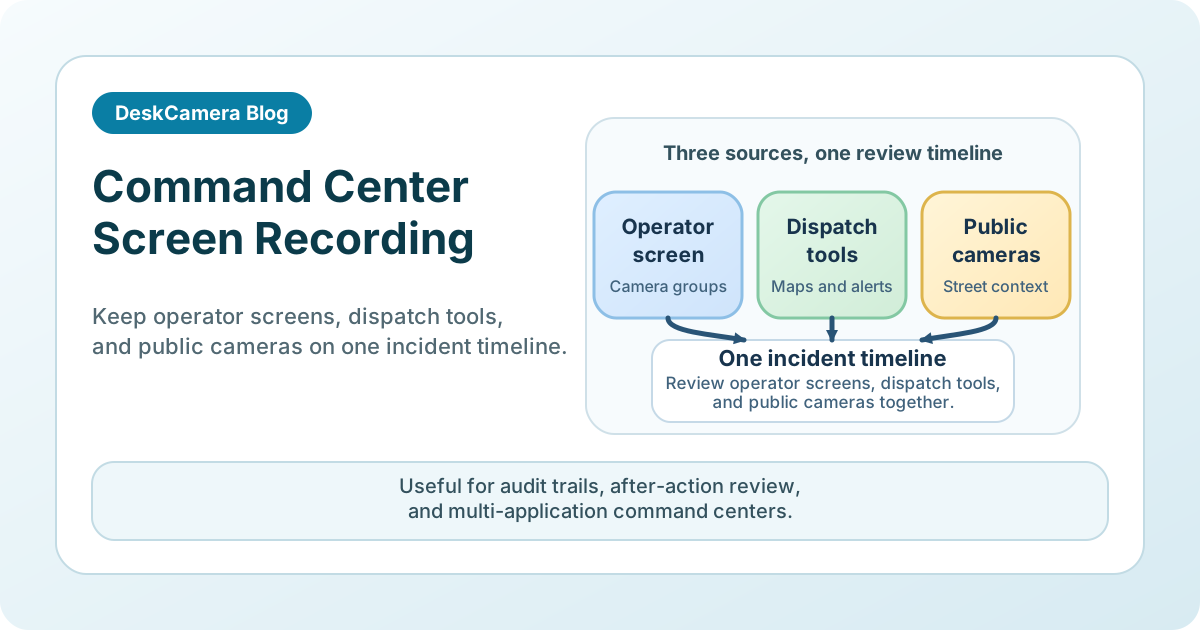
- keep dispatch, map, and selected camera views on the same VMS timeline as public-space cameras
- review supervisor decisions and handoffs without relying only on login logs or memory
This is not generic employee screen monitoring. The useful record is the command-center screen that explains how a city response was managed.
Workflow 1: Reconstruct the Dispatch and Camera-Selection Timeline
One of the clearest city use cases is a fast-moving incident that starts on a public camera and then shifts into operator decision-making.
A street camera may show the event itself, but the later review often depends on the control-room timeline around it. Supervisors may need to know:
- which live view or camera group the operator opened first
- when the operator switched from overview cameras to detail cameras
- what map, CAD, or dispatch tools were visible during the escalation
- whether key information appeared on screen before or after the response changed
Recording one selected workstation makes that decision window reviewable beside the source cameras instead of reconstructing it from memory after the fact.
Workflow 2: Supervisor Review Across Shifts
City command centers also use screen evidence after the incident is over.
When a complaint, delayed escalation, or response-quality question is reviewed later, login data and timestamps are not enough. Supervisors may need to see whether the operator stayed on the right camera group, opened the correct supporting tools, handed the event off cleanly, or missed information that was already visible on screen.
That kind of recording is especially useful for:
- training new operators
- reviewing delayed escalations
- comparing response patterns across shifts
- checking whether procedural changes are actually visible in day-to-day operator behavior
Real-World Pattern: Multi-City Control Rooms on Standard NVRs
Vivek Kumar at Veracity India records dual-monitor security control room workstations across multiple cities to standard NVRs over ONVIF with low CPU impact per workstation.
That deployment is close to what many city teams need: a multi-monitor control-room desk inside the same surveillance workflow as the surrounding cameras, without a separate hardware encoder on every seat.
Common city command-center use cases include dispatch and government-security review workstations, alarm-monitoring consoles, and operator supervision positions where cameras, logs, or audit trails alone do not show enough context.
If the use case is more transport-focused, see airport control room and operations screen recording .
Questions to Clarify During a City Command Center Pilot
Which screen answers the review question
Many city command-center desks use two, three, or more displays. Start by identifying which screen actually matters during review: the camera wall, the dispatch queue, the map, or the supervisor console.
Will dispatch and map screens stay readable in playback
Dense CAD, GIS, watchlist, and incident-management screens can be harder to review than a normal office desktop. A pilot should confirm that text, color states, and status changes are still useful in recorded playback.
What happens during sign-out, reboot, and shift change
Continuity during logoff and restart is a common control-room concern. In a 24/7 command center, that matters because a desk may change operators without the review need going away.
Who should be allowed to review the recorded screen
Recorded operator screens can expose internal procedures, identifiers, and sensitive applications. Reviewer permissions, privacy scope, and retention rules should be set before the pilot expands.
Can the pilot replace the current hardware path cleanly
Many teams evaluating DeskCamera previously relied on hardware encoders, splitters, or even a camera pointed at the monitor. If the goal is to replace that chain, define how each workstation will be named, streamed, and reviewed inside the target VMS before removing the old setup.
Keep Screen Evidence on the Same Incident Timeline
City security teams already conduct incident review inside the VMS. A separate archive of desktop recordings adds another system, another permission model, and another retrieval step.
Recording the selected workstation in the same VMS as the surrounding cameras lets supervisors compare screen context, public-space footage, and event timing in one workflow.
If you need the broader workstation-to-VMS implementation model, see How to Record a Computer Screen to a VMS .
If you need the device model behind a workstation endpoint, read Can a PC Act as an ONVIF IP Camera? .
Start with the Desk That Already Drives Escalations
A strong first pilot is one dispatch position, one operator station, or one supervisor desk where post-incident review already depends on what was visible on screen. That keeps the project narrow while the team validates monitor scope, playback readability, shift-change continuity, permissions, and retention on a real workflow.
If that matches your environment, review the DeskCamera city surveillance page to see how command-center workstations fit beside street, transit, and public-building camera coverage. Then start a free trial for one dispatch desk or operator station and confirm that the recorded screen is genuinely useful in the VMS before expanding.